


초기 인터넷 세대의 많은 사람들에게 1990년대와 2000년대 초 온라인 사기와의 첫 번째 인상적인 조우 중 하나는 악명 높은 “나이지리아 왕자” 이메일이었다. 그 내용은 동결된 수백만 달러, 도움 요청, 그리고 후한 보상의 약속이라는 믿기 어려운 이야기였다. 사기범들은 보통 자신들이 박해받는 왕실의 일원이며 돈을 국외로 옮기는 데 도움이 필요하다고 주장했다. 그 대가로 피해자들은 거액의 재산 일부를 받을 것이라고 약속받았다. 이후 그 돈이 풀리기 전에 선불 ‘수수료’, 세금, 법률 비용 또는 뇌물을 내라는 요구를 받았다. 물론 약속된 재산은 결코 실현되지 않았다.
이른바 ‘선불 수수료’ 사기는 이후 세계에서 가장 수익성이 높고 적응력이 강한 범죄 기업 중 하나로 성장한 사이버범죄 산업의 초기 모습을 보여주었다. 최근의 한 세계적 평가는 2024년 사기와 금융사기가 1조 달러 이상, 즉 세계 GDP의 약 1%에 해당하는 규모를 창출했으며, 2025년에는 전 세계 성인의 57%가 어떤 형태로든 사기에 노출되었다고 추정했다(Amerhauser & Goodwin 2026).
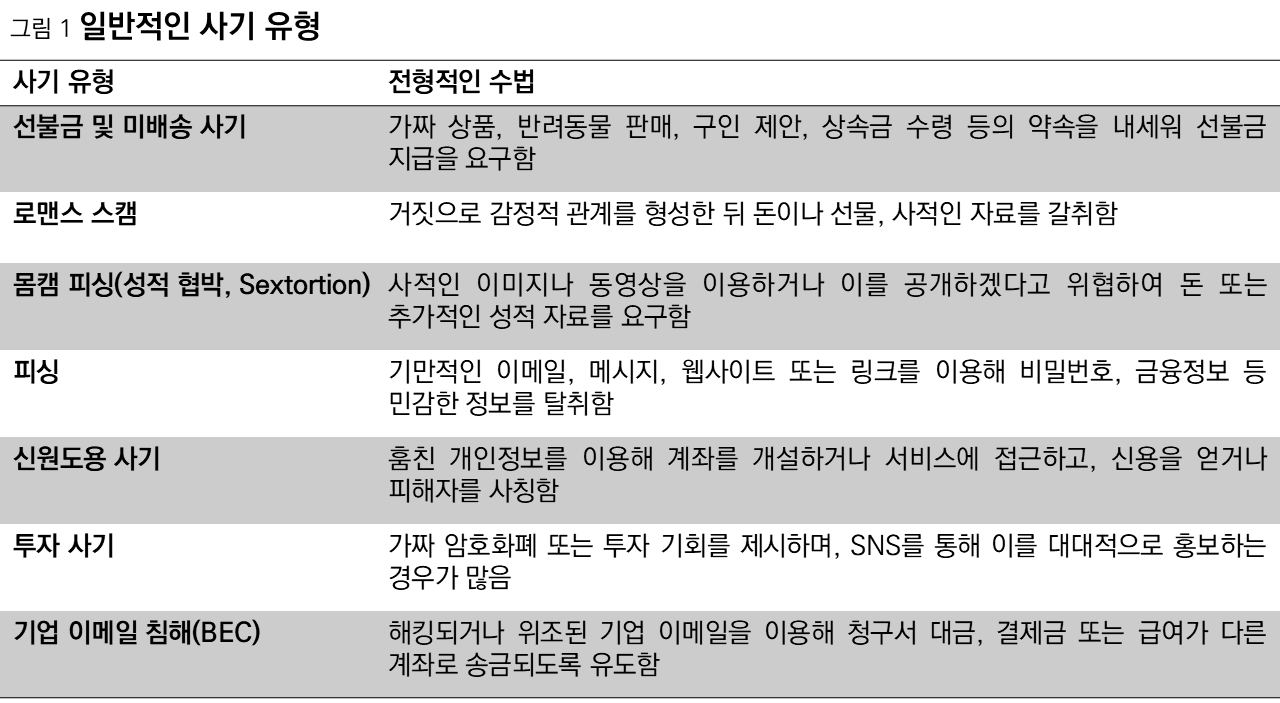
서아프리카와 남부 아프리카의 일부 지역, 특히 나이지리아와 가나는 세계 사이버범죄 경제의 중요한 거점이 되었다. 2024년 세계 사이버범죄 지수에서 나이지리아는 5위, 가나는 13위를 차지했다. 이러한 활동은 아프리카 전역의 피해자를 대상으로 하지만, 그 범위는 전 세계적이기도 하다. 미국에서는 사이버범죄 피해액이 이제 매년 수백억 달러로 집계되며, 서아프리카 네트워크는 특히 비즈니스 이메일 침해, 로맨스 사기, 몸캠 피싱 등 대규모 사기 경제와 연계되어 왔다(그림 1 참조).
이에 대응하여 정부, 국제기구, 법집행기관은 더 나은 치안, 더 강력한 사이버범죄 법률, 향상된 수사 역량, 국제 협력, 기술·장비·훈련에 대한 투자의 필요성을 강조한다. 이러한 대응은 중요하다. 특히 범죄 네트워크가 인공지능, 암호화폐, 암호화된 통신 플랫폼과 같은 신기술에 적응하는 속도를 고려하면 더욱 그렇다. 그러나 치안에만 좁게 초점을 맞추는 것은 더 깊은 문제를 놓칠 위험이 있다. 아프리카, 특히 서아프리카에서 사이버범죄의 역할이 커지는 현상은 발전 문제로도 이해되어야 한다. 사기 경제의 확장은 1980년대 이후 많은 아프리카 경제를 형성해 온 발전 실패에 뿌리를 두고 있다. 구조조정, 탈산업화, 불안정한 노동시장, 취약한 일자리 창출, 세계경제로의 불평등한 통합은 많은 청년들을 부와 이동성, 소비에 관한 세계적 이미지와 강하게 연결시켰지만, 안정적 고용, 성인기, 사회적 인정으로 나아갈 수 있는 경로는 박탈했다.
정책결정자들은 종종 사이버범죄를 세계화의 ‘어두운 면’으로 규정한다. 즉 빠른 경제성장을 이끌어 온 디지털 연결성, 세계시장 접근, 금융 네트워크, 국경을 넘는 소통의 형태를 악용하는 범죄적 일탈의 결과로 본다. 그러나 사이버범죄는 세계화 자체의 모순에 의해서도 형성된다. 세계화는 포용, 부, 이동성을 약속하지만, 실제로는 불안정, 배제, 합법적 경제에 대한 깊이 불평등한 접근을 제공하는 경우가 많다. 많은 아프리카 청년들에게 세계화는 상징적·기술적으로는 세계적 기회와 연결되어 있지만, 경제적·사회적으로는 그 기회에서 배제되는 세계를 만들어 냈다. 이러한 맥락에서 사이버범죄 참여는 위험하고 착취적이기는 하지만, 막힌 이동성, 실업, 좌절된 열망을 헤쳐 나가는 하나의 방식이 될 수 있다. 사이버범죄는 세계화의 어두운 면일 뿐 아니라, 세계화 실패의 산물이기도 하다.
이 글의 나머지 부분이 보여주듯이, 아프리카의 사이버범죄는 따라서 형사사법의 과제이자 실패한 발전의 증상으로 이해되어야 한다. 나이지리아와 가나 같은 곳에서 사기 경제가 성장한 현상은 단순히 취약한 치안, 범죄적 일탈, 기술적 기회만으로 설명될 수 없으며, 이를 추동하는 발전 과제에 대응하는 정책이 필요하다.
서아프리카 사이버범죄의 지속적 성장
초기의 ‘나이지리아 왕자’ 선불 수수료 사기 이후, 서아프리카의 사기 경제는 확장되고 다변화되었으며 끊임없이 적응해 왔다. 비교적 단순한 이메일 기반 사기로 시작된 것이 이제는 선불 수수료 및 미배송 사기, 로맨스 및 관계 사기, 투자 사기, 몸캠 피싱, 피싱, 신원 도용, 비즈니스 이메일 침해 등 훨씬 더 넓은 사이버 기반 범죄 생태계로 발전했다(그림 1 참조).
서아프리카가 사기 경제에서 특히 중요한 장소가 된 데에는 여러 이유가 있다. 나이지리아와 가나 같은 국가들은 비교적 교육 수준이 높은 청년 인구가 많고, 영어 능력이 높으며, 해외 이주와 초국적 사회적 연결의 오랜 역사를 갖고 있다. 이러한 요인들은 사기범들이 북미와 유럽의 피해자들과 소통하기 쉽게 만들었다. 인터넷 접근, 휴대전화 사용, 디지털 결제 시스템의 확대는 사이버 기반 사기의 기회를 더욱 늘렸다. 미국과 유럽 사이에 위치한 서아프리카의 시간대 역시 세계의 많은 다른 지역보다 해외 피해자들과 실시간으로 소통하기 쉽게 만들었다(Button et al. 2024).
1990년대와 2000년대에 더 저렴해진 컴퓨터, 인터넷 카페, 공공도서관, 전 세계적으로 접근 가능한 이메일 플랫폼은 온라인 사기의 빠른 확산을 가능하게 했다. 초기 사기범들이 야후 이메일 계정을 널리 사용하면서 ‘야후 보이즈(Yahoo Boys)’라는 명칭이 생겨났고, 이는 특히 나이지리아에서 인터넷 사기에 관여한 젊은 남성들을 가리키는 약칭이 되었다. 그러나 시간이 지나면서 이 용어는 특정 유형의 사기범뿐 아니라 열망과 불법적 기업가정신의 더 넓은 사회적 세계를 묘사하게 되었다. 대중문화에서 야후 보이라는 인물상은 합법적 고용과 사회적 이동의 경로가 종종 막혀 있는 상황에서 빠른 돈, 과시적 소비, 지위 추구와 연결되었다.
범죄는 또한 더 조직화되고 전문화되었다. 지난 10년 동안 이른바 ‘허슬 킹덤(hustle kingdoms)’이 등장했다. 이는 경험 많은 사기범들이 신입 참여자들에게 온라인 사기를 수행하는 방법을 가르치는 비공식적 또는 반조직적 사이버범죄 훈련 ‘학교’로, 실무 훈련, 대본, 기술 조언, 멘토링, 네트워크 접근을 제공하여 고급 기술 능력이 없는 청년들도 쉽게 진입할 수 있게 한다(Lazarus & Soares 2024). 콘프래터니티(confraternities) 역시 이 사이버범죄 경제의 일부에서 중요한 역할을 해 왔다. 블랙 액스(Black Axe)와 같은 집단은 원래 남학생들에게 연대감, 정체성, 상호지원, 보호, 지위, 영향력 있는 사회 네트워크에 대한 접근을 제공하기 위한 나이지리아 대학 기반 남성 결사체로 시작했다. 시간이 흐르면서 일부 콘프래터니티는 초국적 범죄 네트워크로 진화했다(Lazarus 2025).
기술 변화는 진입 장벽을 더욱 낮추었다. 이제 사이버범죄에 참여하려는 사람이 반드시 고급 코딩 능력을 갖출 필요는 없다. 사기 대본, 피싱 키트, 가짜 웹사이트, 도난 데이터, 랜섬웨어 패키지, 튜토리얼, 자금세탁 서비스는 모두 디스코드와 텔레그램 같은 암호화된 플랫폼을 통해 구매할 수 있다. 서아프리카의 사이버범죄 경제는 여전히 매우 다양하다. 여기에는 혼자 활동하는 소규모 개인, 느슨한 동료 집단, 반조직적 훈련 네트워크, 콘프래터니티와 연결된 구조, 더 정교한 초국적 범죄조직이 포함된다.
법집행의 한계
아프리카의 사이버범죄에 대한 정책 대응은 분명한 이유로 강화되어 왔다. FBI는 2009년부터 2023년까지 BEC 사기로 인한 손실이 500억 달러를 넘는다고 추산하며, 로맨스 사기는 피해자에게 재정적으로나 심리적으로 여전히 파괴적이다(FBI, 2024). 한 최근 연구는 미국에서만 로맨스 사기 손실이 2023년에 약 13억 달러에 이르렀다고 지적한다(Button et al. 2025).
경찰과 국제기구들은 점점 더 많은 단속으로 대응해 왔다. 2024년 인터폴과 AFRIPOL이 아프리카 19개국에서 조율한 세렝게티 작전(Operation Serengeti)에서 당국은 1,006명을 체포하고, 약 35,000명의 피해자를 확인했으며, 관련 손실 약 1억 9,300만 달러를 밝혀냈다(Associated Press 2024). 이러한 작전은 정보 공유와 조율된 집행이 네트워크를 교란하고, 자금을 회수하며, 초국적 범죄 연결망을 드러낼 수 있음을 보여준다. 그러나 동시에 대규모 단속조차 더 넓은 사기 경제의 규모에 맞서 얼마나 제한적인지를 보여준다.
사기 경제 아래의 발전 위기
사이버 사기에 대한 치안 대응이 제한된 성공만을 거두는 이유 중 하나는, 그것이 사기 부문을 추동하는 훨씬 더 넓은 구조적 압력에 맞서고 있기 때문이다.
첫 번째 동인은 경제적 불안정이다. 빈곤만으로는 대규모 사기 경제의 성장을 설명할 수 없다. 빈곤한 지역이 모두 사이버 사기의 주요 중심지가 되는 것은 아니기 때문이다. 그러나 앞서 강조한 서아프리카와 남부 아프리카 일부 지역의 가능 조건, 즉 양호한 교육 수준, 영어 능력, 인터넷 접근성, 유럽 및 북미 시간대와의 근접성, 서구 문화적 참조에 대한 친숙함과 결합될 때, 극심한 빈곤을 경험하고 불안정하고 불안정하며 저임금의 비공식 노동에 직면한 사람들에게 사기 노동은 실행 가능한 생계 선택지가 되었다.
나이지리아는 이 더 넓은 발전 위기를 잘 보여준다. 1970년대 석유 붐은 번영, 사회적 이동성, 국가 주도 발전에 대한 기대를 높였지만, 이러한 열망은 1980년대의 부채 위기, 긴축, 경제 쇠퇴로 무너졌다. 나이지리아의 사기 경제는 그 뒤를 이은 장기 경제위기 속에서 뿌리내렸고, 이 위기는 실업, 불안정, 공식적 상승 경로에 대한 신뢰 하락을 낳았다. 이후 인터넷의 확산은 해외로부터 돈을 벌 수 있는 새로운 방식을 열었다. 나이지리아는 여전히 석유에 크게 의존하고 있으며, 석유는 여전히 수출의 압도적 비중과 정부 수입의 큰 부분을 차지한다. 그러나 이러한 수입 구조는 광범위하고 안정적인 고용을 만들어 내지 못했다. 대신 경제는 반복적으로 변동성, 부패, 부채 압박, 거대한 경제적 불평등에 의해 형성되어 왔으며, 이는 대다수의 경제적 고통과 나란히 소수의 과시적 소비로 나타난다. 최근 노동시장 자료는 이 문제를 분명히 보여준다. 임금노동에 종사하는 노동자는 소수에 불과하고, 압도적 다수는 자영업자이거나 비공식적으로 일하고 있다. 연료 보조금 철폐와 통화 평가절하를 포함한 최근 개혁은 공공재정을 안정시키기 위한 것이었지만, 동시에 인플레이션과 심각한 생활비 위기를 부추겼다.
두 번째 동인은 좌절된 청년의 열망이다. 나이지리아는 젊은 인구를 가진 나라로, 인구의 3분의 2가 30세 이하이다. 많은 청년들은 어느 정도 교육을 받았고, 디지털 문해력을 갖추었으며, 이동성, 소비, 사회적 인정에 대한 강한 열망을 가지고 있다. 그러나 이들을 흡수할 안정적 일자리는 너무 적다. 그 결과 청년들이 욕망하도록 장려되는 것과 경제가 현실적으로 달성하게 해 주는 것 사이에 큰 간극이 생기며, 많은 이들이 장기간의 ‘대기 상태(waithood)’를 경험하게 된다. 이 용어는 처음에는 중동의 청년 이행 연구에서 사용되었고, 이후 알신다 혼와나(Alcinda Honwana, 2012)에 의해 아프리카 연구에서 발전되었다. 대기 상태란 청년들이 더 이상 어린이는 아니지만 사회적으로 인정받는 성인기에 도달하지 못하는 장기적 기간을 의미한다. 그들은 일하고, 결혼하고, 독립적으로 살고, 친족을 부양할 나이가 되었을 수 있지만, 그렇게 하는 데 필요한 안정적 소득, 주거, 지위를 확보하지 못한다. 사기 경제는 강화된 열망과 막힌 기회 사이의 이 간극에서 번성한다. 청년들은 야심차고, 기업가적이며, 세계적으로 연결되라고 장려받지만, 공식 노동시장은 부, 이동성, 인정으로 가는 신뢰할 만한 경로를 거의 제공하지 않는다. 그러면 사기는 일부에게 불법적 기업가정신의 한 형태, 즉 사회적으로 가치 있는 목표를 비합법적 수단을 통해 추구하는 방식이 된다.
세 번째 동인은 사기 노동을 둘러싼 도덕경제의 변화이다. 일부 공동체에서 사이버 사기는 단지 용인될 뿐 아니라 선망의 대상이 되었다. 성공한 사기범들은 특히 가족, 친구, 교회 또는 지역 네트워크에 돈을 재분배할 때 영리하고, 수완이 있으며, 관대한 사람으로 여겨질 수 있다. 사기범이라는 인물상은 행위성과 생존, 즉 ‘허슬’하고, ‘성공’하며, 가난에 머무르기를 거부하는 사람과 연결될 수 있다. 이러한 서사는 불공정한 체제에 대한 인식으로 강화된다. 부패, 불평등, 정치적 면책이 두드러지는 맥락에서 일부 사람들은 사기를 이미 기만으로 구조화된 세계를 헤쳐 나가는 방식으로 합리화한다. 가나의 로맨스 사기 가해자들과의 인터뷰에서는 일부가 사기를 식민지 착취에 대한 보상적 정의의 형태로, 즉 아프리카에서 빼앗긴 부를 주로 백인과 서구 피해자들로부터 정당하게 되찾는 ‘역추출’의 형태로 설명했음을 발견했다(Lazarus et al. 2026). 이러한 수사는 발생한 피해를 정당화하지 않는다. 그러나 사기범들이 절도를 역사적 보상으로 재구성함으로써 자신의 행위를 도덕적으로 중화하는 방식을 보여준다.
개발 과제로서의 사이버범죄 대응
따라서 서아프리카에서 사이버범죄의 부상은 단순히 범죄적 일탈과 혁신에 관한 이야기가 아니라, 개발 실패, 막힌 미래, 불평등한 세계적 통합에 관한 이야기이기도 하다. 이는 막대한 피해를 초래하는 산업을 미화하거나 정당화하려는 것이 아니다. 다만 치안과 도덕적 비난에만 초점을 맞춘 대응은 사기 경제를 뒷받침하는 발전 위기를 무시한다면 계속 부적절할 것임을 강조한다.
사이버 사기가 막힌 청년 이행, 심각한 불평등, 얇은 공식 고용 기반, 부패, 기만을 정당화하는 널리 공유된 서사로부터 힘을 얻는다면, 대응에는 신뢰할 만한 청년 고용 경로, 제대로 작동하는 교육-노동 이행, 더 강한 지역 제도, 그리고 배제를 단순히 안보 위협으로 관리하는 것이 아니라 줄이는 발전 방식이 포함되어야 한다. 청년들에게 기업가적이고, 자립적이며, 세계적으로 연결되라고 말하면서도 공식 경제가 비공식 노동, 불안정한 소득, 막힌 성인기만을 제공한다면, 불법적 기업가정신은 열망을 추구하는 하나의 경로로 계속 남을 것이다.
사기 산업에 대한 현재의 정책 대응은 마크 더필드(Mark Duffield, 2007)가 유명하게 ‘발전-안보 연계(development-security nexus)’라고 부른 것을 전형적으로 보여줄 위험이 있다. 더필드는 현대의 발전이 세계적 평등과 재분배에 관심을 둔 정치적 기획에서 벗어나, 세계적 번영에서 배제된 사람들 사이의 불안정을 관리하는 안보 기획으로 이동했다고 경고한다. 이러한 틀에서 발전은 불평등을 생산하는 구조를 변화시키는 것이라기보다, 그 불평등의 교란적 효과를 억제하는 것에 가까워진다. 이를 사이버범죄에 적용하면 위험은 분명하다. 아프리카 청년들은 의미 있는 경제적 미래로부터의 배제 자체가 문제의 일부인 시민이 아니라, 관리되고 규율되며 감시되어야 할 위험으로 주로 프레임화된다.
따라서 과제는 치안과 발전 중 하나를 선택하는 것이 아니다. 사이버범죄에는 둘 다 필요하다. 그러나 집행은 더 넓은 발전 의제 속에 포함되어야 한다. 그렇지 않으면 사이버범죄는 사람들을 연결하면서도 동등하게 포함하지 않는 세계질서의 증상이 아니라, 일탈적 개인들의 문제로 다루어질 것이다.
Cybercrime in West Africa: Scam economies, youth aspiration and failed development
The Scam Economy in West Africa: Cybercrime, youth aspiration and failed development
For many people of the early internet generation, one of the first memorable encounters with online deception in the 1990s and early 2000s was the infamous “Nigerian prince” email: an implausible tale of frozen millions, a plea for help, and the promise of a generous reward. Scammers typically claimed to be members of a persecuted royal family who needed assistance moving money out of the country. In return, victims were promised a generous share of the fortune. They were then asked to pay upfront “fees”, taxes, legal costs, or bribes before the money could be released. The promised fortune, of course, never materialised.
These so-called “advance-fee” frauds offered an early glimpse of a cybercrime industry that has since grown into one of the most profitable and adaptive criminal enterprises in the world. A recent global assessment estimated that scams and fraud generated more than US$1 trillion in 2024, roughly 1% of global GDP, while 57% of adults worldwide reported some form of scam exposure in 2025 (Amerhauser & Goodwin 2026).
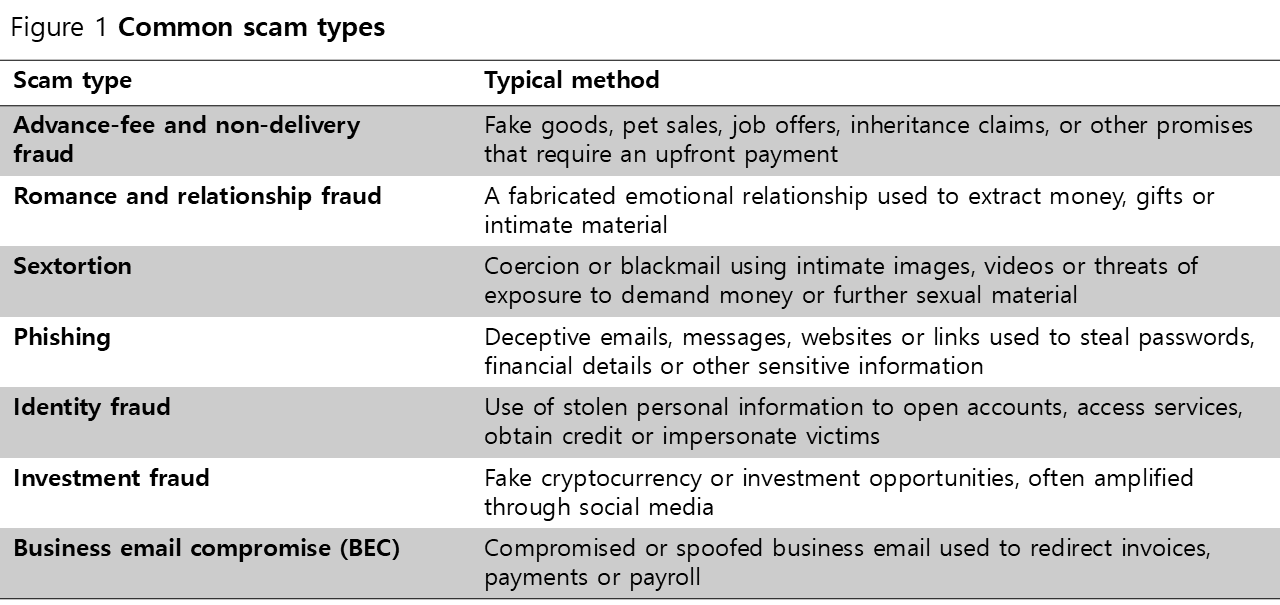
Parts of West and Southern Africa, especially Nigeria and Ghana, have become significant nodes in the global cybercrime economy. Nigeria ranked fifth and Ghana thirteenth globally in the 2024 World Cybercrime Index. These activities target victims across Africa, but they are also global in reach. In the United States, cybercrime losses are now measured in the tens of billions of dollars annually, and West African networks have been linked to several high-volume scam economies, especially business email compromise, romance fraud and sextortion (see Figure 1).
In response, governments, international organisations and law enforcement agencies emphasise the need for better policing, stronger cybercrime legislation, improved investigative capacity, international cooperation, and investment in technology, equipment and training. These responses are important, particularly given the speed with which criminal networks adapt to new technologies such as artificial intelligence, cryptocurrency and encrypted communication platforms. However, a narrow focus on policing risks missing a deeper point. Africa’s growing role in cybercrime, especially in West Africa, must also be understood as a development problem. The expansion of the scam economy is rooted in the development failures that have shaped many African economies since the 1980s. Structural adjustment, deindustrialisation, precarious labour markets, weak job creation, and unequal forms of integration into the global economy have left many young people highly connected to global images of wealth, mobility and consumption, while denying them stable routes into employment, adulthood and social recognition.
Policymakers often characterise cybercrime as the ‘dark side’ of globalisation: a consequence of criminal deviance that exploits the forms of digital connectivity, access to global markets, financial networks and cross-border communication that have driven rapid economic growth. Yet, cybercrime is also shaped by the contradictions of globalisation itself: a system that promises inclusion, wealth and mobility, but often delivers insecurity, exclusion and deeply unequal access to the legitimate economy. For many young Africans, globalisation has created a world in which they are connected to global opportunities symbolically and technologically, but excluded from them economically and socially. In this context, participation in cybercrime can become one way, however risky and exploitative, of navigating blocked mobility, unemployment and frustrated aspirations. Cybercrime is not only the dark side of globalisation; it is also one of the products of its failures.
As the rest of this essay goes on to show, cybercrime in Africa should therefore be understood as both a criminal justice challenge and a symptom of failed development. The growth of scam economies in places such as Nigeria and Ghana cannot be explained simply by weak policing, criminal deviance, or technological opportunity but require responses that address the development challenges that drive it.
The rise and rise of Cybercrime in West Africa
Since the early ‘Nigerian prince’ advance-fee frauds, West Africa’s scam economy has expanded, diversified and continually adapted. What began with relatively simple email-based fraud has developed into a much wider ecosystem of cyber-enabled crime, including advance-fee and non-delivery fraud, romance and relationship scams, investment fraud, sextortion, phishing, identity theft and business email compromise (see Figure 1).
West Africa became a particularly important site for this economy for several reasons. Countries such as Nigeria and Ghana have large populations of relatively well-educated young people, high levels of English-language ability, and long histories of outward migration and transnational social connection. These factors made it easier for scammers to communicate with victims in North America and Europe. Expanding internet access, mobile phone use and digital payment systems further increased opportunities for cyber-enabled fraud. West Africa’s time zone, positioned between the United States and Europe, also made real-time communication with foreign victims easier than in many other parts of the world (Button et al. 2024).
By the 1990s and 2000s, cheaper computers, internet cafés, public libraries and globally accessible email platforms allowed online fraud to expand rapidly. The widespread use of Yahoo email accounts by early fraudsters gave rise to the label “Yahoo Boys”, which became shorthand for young men involved in internet fraud, especially in Nigeria. Over time, however, the term came to describe not only a type of scammer, but also a wider social world of aspiration and illicit entrepreneurship. In popular culture, the figure of the Yahoo Boy became associated with fast money, conspicuous consumption and the pursuit of status in contexts where legitimate pathways to employment and social mobility were often blocked.
The sector has also become more organised and professionalised. The past decade has seen the emergence of so-called “hustle kingdoms”: informal or semi-organised cybercrime training ‘schools’ where more experienced scammers teach newer recruits how to carry out online scams, providing practical training, scripts, technical advice, mentoring and access to networks, lowering the barriers to entry for young people who may not have advanced technical skills (Lazarus & Soares 2024). Confraternities have also played an important role in parts of this cybercrime economy. Groups such as Black Axe began as Nigerian university-based brotherhoods whose original purpose was to provide male students with solidarity, identity, mutual support, protection, status and access to influential social networks. Over time, some confraternities have evolved into transnational criminal networks (Lazarus 2025).
Technological change has lowered the barriers to entry even further. Would-be scammers no longer need advanced coding skills to participate in cybercrime. Scam scripts, phishing kits, fake websites, stolen data, ransomware packages, tutorials and laundering services can all be bought through encrypted platforms such as Discord and Telegram. West Africa’s cybercrime economy remains highly diverse. It includes small-scale individuals working alone, loose peer groups, semi-organised training networks, confraternity-linked structures and more sophisticated transnational criminal organisations.
The limits of law enforcement
The policy response to cybercrime in Africa has intensified for obvious reasons. The FBI estimates more than US$50 billion in losses from BEC scams between 2009 and 2023, while romance fraud remains financially and psychologically devastating for victims (FBI, 2024). One recent study notes that in the US alone romance-fraud losses reached about US$1.3 billion in 2023 (Button et al. 2025).
Police and international agencies have responded with a growing number of crackdowns. In 2024, Operation Serengeti, coordinated by INTERPOL and AFRIPOL across 19 African countries, authorities made 1,006 arrests, identified around 35,000 victims and uncovered nearly US$193 million in associated losses (Associated Press 2024). These operations show that intelligence sharing and coordinated enforcement can disrupt networks, recover money and expose transnational criminal linkages. But they also reveal how limited even major crackdowns remain against the scale of the wider scam economy.
The development crisis beneath the scam economy
Part of the reason policing responses to cyber-fraud have limited success is that they are pushing against a much wider set of structural pressures that drive the scam sector.
The first driver is economic precarity. Poverty alone cannot explain the growth of large scam economies: many poor places do not become major centres of cyber-fraud. But combined with the enabling conditions in parts of Western and Southern Africa highlighted above, including good education standards, English-language skills, internet access, proximity to European and North American time zones, and familiarity with Western cultural references, scam work has become a viable livelihood option experiencing severe poverty and facing insecure, unstable, poorly paid and informal work.
Nigeria illustrates this wider development crisis. The oil boom of the 1970s had raised expectations of prosperity, social mobility and state-led development, only for these aspirations to be dashed by the debt crisis, austerity and economic decline of the 1980s. The country’s scam economy took root amidst the prolonged economic crisis that followed, which generated unemployment, insecurity and declining confidence in formal routes to advancement. The later spread of the internet then opened new ways to earn from abroad. Nigeria remains heavily dependent on oil, which still accounts for the overwhelming share of exports and a large proportion of government revenue. Yet this revenue structure has not produced broad-based, secure employment. Instead, the economy has repeatedly been shaped by volatility, corruption, debt pressures and vast economic inequality which manifests in conspicuous consumption for a small minority alongside economic hardship for most. Recent labour-market data underline the problem. Only a small minority of workers are in wage employment, while the overwhelming majority are self-employed or working informally. Recent reforms, including fuel subsidy removal and currency devaluation, were intended to stabilise public finances, but they also fuelled inflation and a severe cost-of-living crisis.
The second driver is frustrated youth aspiration. Nigeria has a young population, with two-thirds the age of 30. Many young people have some education, digital literacy and strong aspirations for mobility, consumption and social recognition. But there are too few secure jobs to absorb them. The result is a large gap between what young people are encouraged to desire and what the economy allows them realistically to achieve, leaving many to experience am erxtended period of ‘waithood’. First used in studies of youth transitions in the Middle East and later developed in African studies by Alcinda Honwana (2012), waithood refers to a prolonged period in which young people are no longer children but are unable to achieve socially recognised adulthood. They may be old enough to work, marry, live independently and support relatives, but they cannot secure the stable income, housing or status required to do so. Scam economies thrive in this gap between intensified aspirations and blocked opportunities. Young people are encouraged to be ambitious, entrepreneurial and globally connected, while formal labour markets offer few credible routes to wealth, mobility or recognition. Fraud then becomes, for some, a form of illicit entrepreneurship: a way of pursuing socially valued goals through illegitimate means.
The third driver is a shifting moral economy around scam work. In some communities, cyber-fraud has become not only tolerated but admired. Successful scammers may be seen as smart, resourceful and generous, especially when they redistribute money to family members, friends, churches or local networks. The figure of the scammer can become associated with agency and survival: someone who is ‘hustling’, ‘making it’ or refusing to remain poor. Such narratives are reinforced by perceptions of an unfair system. In contexts marked by corruption, inequality and political impunity, some rationalise fraud as a way of navigating a world already structured by deception. Interviews with romance-fraud offenders in Ghana found that some framed fraud as a form of reparative justice for colonial exploitation, a form of ‘reverse extraction’ whereby wealth taken from Africa can legitimately be reclaimed from predominantly white and Western victims (Lazarus et al. 2026). This rhetoric does not excuse the harm done, but it does show how scammers morally neutralise their actions by recasting theft as historical redress.
Tackling cybercrime as a development challenge
The rise of cybercrime in West Africa is therefore not simply a story about criminal deviance and innovation, but also about failed development, blocked futures and unequal global integration. This is not to glorify or justify an industry that causes immense harm, but it highlights that responses focused only on policing and moral condemnation will remain inadequate if they ignore the development crisis that underpins the scam economy.
If cyber-fraud draws strength from blocked youth transitions, intense inequality, thin formal employment, corruption and widely shared narratives that legitimate deception, then the response must include credible youth employment pathways, functioning education-to-work transitions, stronger local institutions, and forms of development that reduce exclusion rather than merely managing it as a security threat. If young people are told to be entrepreneurial, self-reliant and globally connected, while the formal economy offers only informal work, unstable income and blocked adulthood, then illicit entrepreneurship will remain one route through which aspirations are pursued.
Current policy responses to the scam industry risk epitomising what Mark Duffield (2007) famously termed the ‘development-security nexus’. Duffield warns that contemporary development has moved away from a political project concerned with global equality and redistribution, and towards a security project concerned with managing instability among those excluded from global prosperity. Development, in this framing, becomes less about transforming the structures that produce inequality and more about containing the disruptive effects of that inequality. Applied to cybercrime, the danger is clear: African youth become framed primarily as risks to be managed, disciplined or surveilled, rather than as citizens whose exclusion from meaningful economic futures is itself part of the problem.
The challenge, then, is not to choose between policing and development. Cybercrime requires both, but enforcement must be embedded within a wider development agenda. Otherwise, cybercrime will be treated as a problem of deviant individuals rather than as a symptom of a global order that connects people without including them equally.
저자 소개
패트릭 미한(Patrick Meehan)(patrick.meehan@manchester.ac.uk)은
맨체스터대학교 평화·분쟁연구 강사이며, 「불법경제, 분쟁, 발전」 과목을 강의하고 있다. 런던 SOAS 대학교에서 개발학 박사학위를 받고 폭력, 분쟁, 불법경제, 개발 등을 연구 주제로 삼고 있다. 특히 미얀마와 동남아시아의 국경지대 및 변경 지역에 초점을 맞추고 있으며, 이 지역에서 거의 20년에 걸쳐 연구를 수행하며 여러 연구를 발표했다. Journal of Peasant Studies (2024)의 ‘불법 마약작물 경제(Illicit Drug Crop Economies)’ 특집호와 International Journal of Drug Policy(2021)의 ‘마약, 분쟁, 개발(Drugs, Conflict, and Development)’ 특집호를 공동 편집한 바 있다.
Dr. Patrick Meehan (patrick.meehan@manchester.ac.uk)
is a Lecturer in Peace and Conflict Studies at the University of Manchester where he convenes a course on Illicit Economies, Conflict and Development. Patrick Meehan has received his doctorate degree in Development Studies at SOAS University of London. His research addresses issues of violence, conflict, illicit economies and development. His work focuses particularly on Myanmar and the borderland and frontier regions of Southeast Asia, where he has conducted research for almost two decades. He has published widely on these topics, including co-editing two Special Issues on ‘Illicit Drug Crop Economies’ in the Journal of Peasant Studies (2024) and ‘Drugs, Conflict, and Development’ in the International Journal of Drug Policy (2021).
참고문헌
Amerhauser, K. and Goodwin, A. (2026) A World of Deceit: Mapping the Landscape of the Global Scam Centre Phenomenon. Geneva: Global Initiative Against Transnational Organized Crime.
Associated Press (2024) ‘Interpol clamps down on cybercrime and arrests over 1,000 suspects in Africa’, AP News, 26 November.
Button, M., Gilmour, P., Hock, B., Jain, T., Jesperson, S., Lazarus, S., Pandey, D. and Sabia, J. (2024) Scoping Study on Fraud Centres: Ghana, India and Nigeria. Brighton: Itad.
Button, M., Lazarus, S., Hock, B., Sabia, J.B., Pandey, D. and Gilmour, P. (2025) ‘Factors influencing involvement in cyber-frauds in West Africa and the implications for policy’, European Journal on Criminal Policy and Research. https://doi.org/10.1007/s10610-025-09649-6
Duffield, Mark. Development, security and unending war: governing the world of peoples. Polity, 2007.
FBI (2024). Internet Crime Report 2023.
Honwana, A. (2012) ‘“Waithood”: Youth transitions and social change’, in Development and Equity: An Interdisciplinary Exploration by Ten Scholars from Africa, Asia and Latin America. The Hague: International Institute of Social Studies.
INTERPOL (2025) INTERPOL Africa Cyberthreat Assessment Report 2025. 4th edn. Lyon: INTERPOL.
Lazarus, S., & Soares, A. B. (2024). From business centres to Hustle Kingdoms: historical perspectives on innovative models of deviant education. International Annals of Criminology, 62(3-4), 449-468.
Lazarus, S. (2025) ‘Cybercriminal networks and operational dynamics of business email compromise (BEC) scammers: Insights from the “Black Axe” confraternity’, Deviant Behavior, 46(4), pp. 456–480. https://doi.org/10.1080/01639625.2024.2352049
Lazarus, S., Hughes, M., Button, M. and Garba, K.H. (2026) ‘Fraud as legitimate retribution for colonial injustice: Neutralization techniques in interviews with police and online romance fraud offenders’, Deviant Behavior, 47(3), pp. 427–448. https://doi.org/10.1080/01639625.2024.2446328
